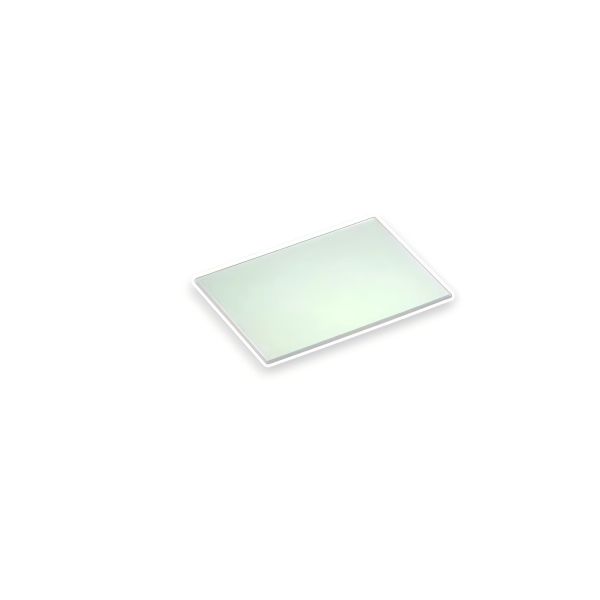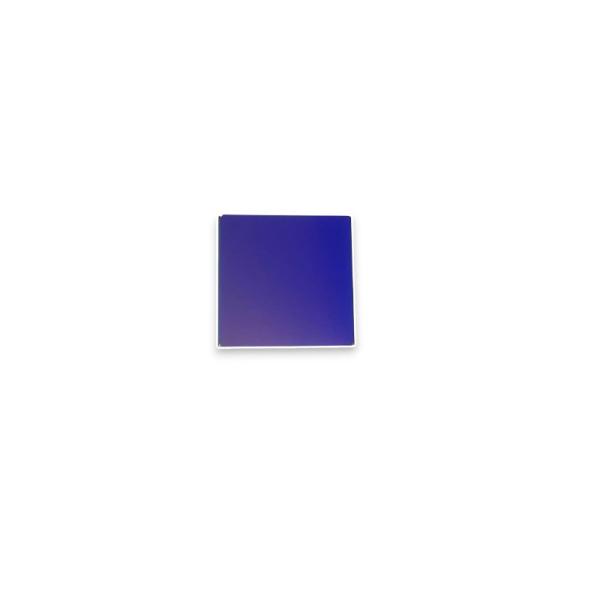
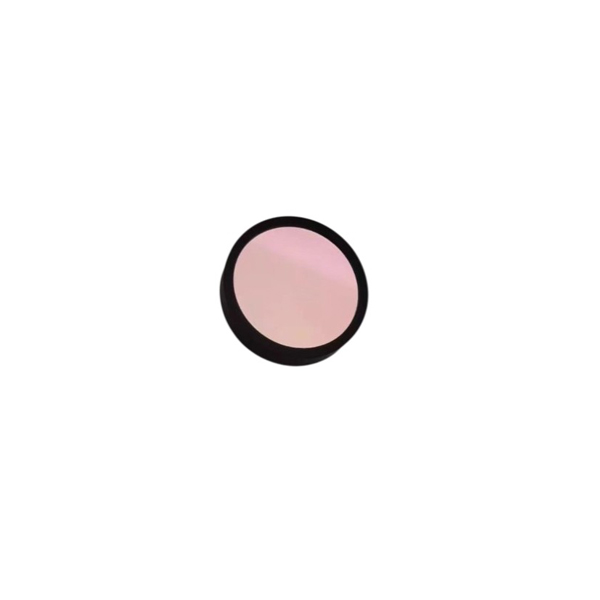
850nm Laser Line Filter FWHM 10nm
850nm Laser Line Filter FWHM 10nm is an optical narrow bandpass filter optimize for GaAlAs lasers. Coligh manufactures 254nm to 1550nm laser line filters.
- Special design for GaAIAs
- Center wavelength 850nm
- FWHM 10nm
- Blocking depth OD4
850nm Laser Line Filter FWHM 10nm Description
850nm Laser Line Filter FWHM 10nm perfectly matches the emission spectrum of GaAlAs lasers. It is specially optimized for GaAlAs lasers, a common light source in the field of communication and sensing. The central wavelength is 850+/-2nm, ensuring efficient signal transmission. The half-bandwidth is 10+/-2nm, and the light is highly transparent in the range of 845nm to 855nm, with a transmittance of >80%, which significantly suppresses ambient light and laser spontaneous radiation, and improves the signal-to-noise ratio. The cut-off depth OD4 in the range of 200-1200nm effectively filters out ultraviolet, visible light and near-infrared interference, and is suitable for complex light environments. We use ion-assisted coating and hard coating technology to reduce light energy loss while extending the service life of the laser.
850nm Laser Line Filter FWHM 10nm Technical Datasheet
| Parameter | Specification |
| Center Wavelength (CWL) | 850 nm ± 2 nm |
| Bandwidth (FWHM) | 10 nm ± 2 nm |
| Peak Transmission | ≥ 80% |
| Blocking Range | OD4 from 200 nm to 1200 nm |
| Suitable laser | GaAlAs Laser |
| Substrate Material | Fused silica / Optical glass |
| Surface Quality | 80-50, 60-40, 40-20 scratch-dig (per MIL-PRF-13830B) |
| Clear Aperture | > 90% of the diameter |
| Filter Diameter | Customizable (e.g.2.0mm, 12.5 mm, 25 mm, 50 mm) |
| Coating Type | Hard-coated, ion-Assisted coating |
| Angle of Incidence (AOI) | 0° (normal incidence) |
| Durability | MIL-STD-810E, Method 507.3 compliant |
| Tempreture | -40℃- +60℃ |
850nm Laser Line Filter FWHM 10nm Applications
- Fiber Optic Communication
In high-speed fiber optic communication such as data centers and 5G base stations, GaAlAs lasers are the core light source for multimode fiber transmission, but their output spectrum may contain side mode noise or ambient light interference, resulting in signal distortion. By accurately matching the main peak of the laser with an 850/10nm narrowband filter, non-main mode stray light can be suppressed to ensure signal purity. - LiDAR and 3D Sensing
In radar systems for autonomous driving and robot navigation and 3D sensing such as face recognition and industrial scanning, 850nm laser pulses are relied on for ranging and imaging, but ambient light will drown out weak laser echo signals, resulting in detection failure. The 850/10nm laser filter can suppress and filter out stray light other than 850nm, retaining only the laser echo signal, increasing the detection distance and accuracy. - Machine Vision
Laser contour detection and part positioning on industrial production lines require high-contrast imaging, but ambient light in the workshop will interfere with the laser pattern and reduce detection accuracy. The 850/10nm filter can filter out ambient light of non-laser wavelengths, retaining only the structured light or speckle pattern projected by the 850nm laser, allowing the camera to clearly capture the target features. - Biomedical instruments
Laser therapy devices, OCT optical coherence tomography and other biomedical instruments require strict control of the laser wavelength to avoid damage caused by non-target tissue absorption of energy, and to eliminate interference of ambient light on the detection signal. This filter ensures that only 850nm therapeutic laser passes through to prevent other wavelengths from being absorbed by the skin or tissue and causing side effects. - Aerospace
Military optoelectronic systems such as infrared guidance and laser communications need to work stably in extreme environments and resist enemy interference light sources. This filter can resist enemy multi-wavelength interference lasers through narrowband filtering and high OD values, ensuring the reliability of one’s own signal link.