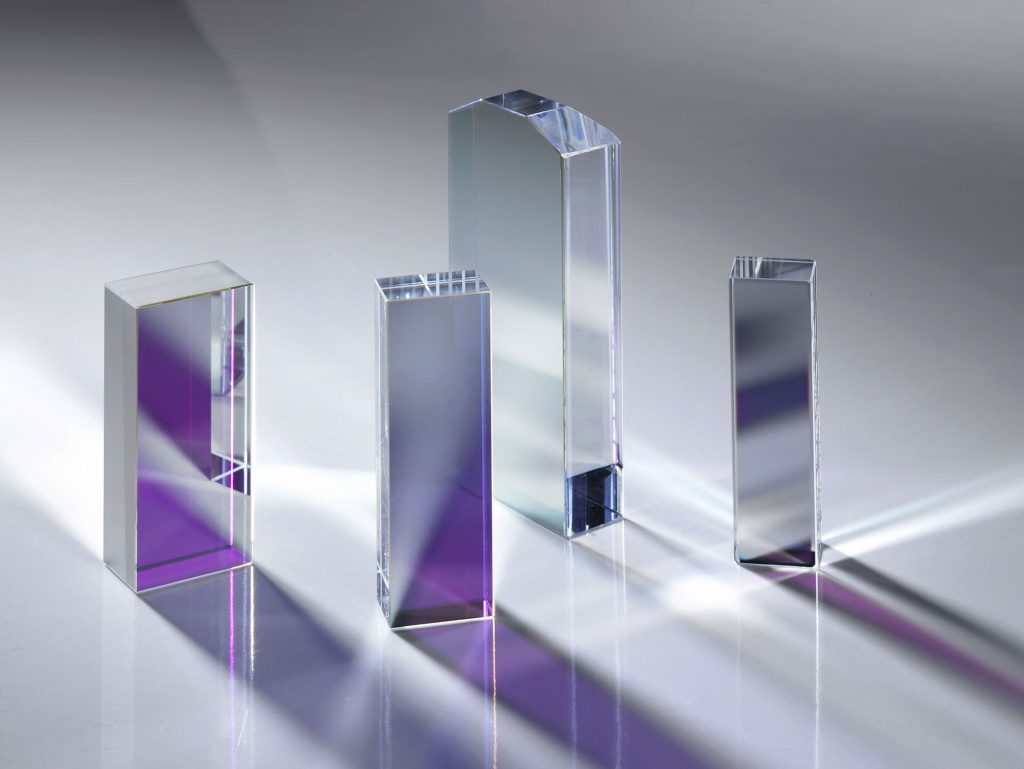
Non-Polarizing Beamsplitter
Non-Polarizing Beamsplitter Series
FAQs
A beamsplitter is an optical component that divides an incident light beam into two beams: transmitted and reflected. This is mainly achieved by coating special optical thin films on a glass substrate. We offer beamsplitters with splitting ratios of 20R/80T, 30R/70T, 40R/60T, 50R/50T, 60R/40T, 70R/30T, and 80R/20T.
Non-polarizing beamsplitters have transmission and reflection ratios independent of polarization, and both transmitted and reflected beams are non-polarized, suitable for general optical splitting.
Polarizing beamsplitters separate light based on polarization states, where transmitted light is mainly P-polarized and reflected light mainly S-polarized. They are used in laser systems, interferometers, and other applications requiring polarization control.
Dielectric beamsplitter mirrors achieve beam splitting by coating multiple dielectric layers on a glass substrate. Coligh’s beamsplitters are all dielectric types, designed to achieve specific wavelength splitting through coating design.
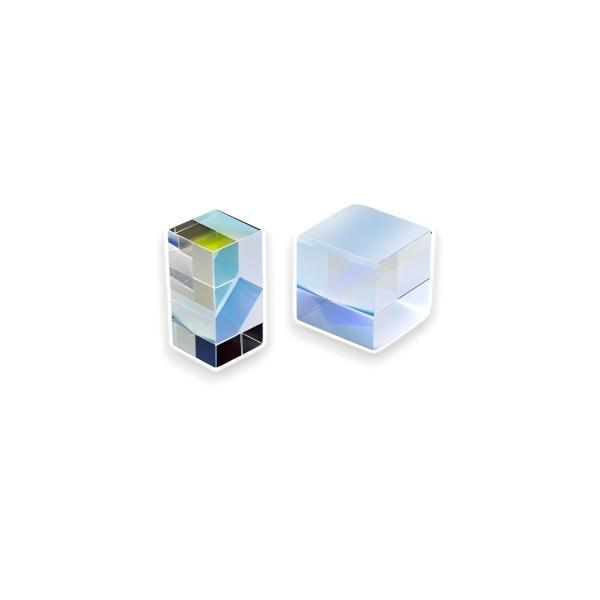
Choose a beamsplitter cube when strict beam alignment is required. Cube beamsplitters have transmitted and reflected beams coplanar with minimal beam displacement and high angular stability.
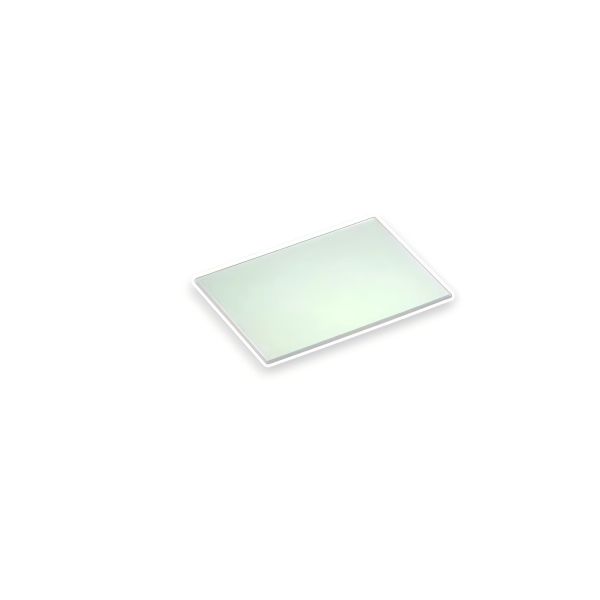
If space is limited or beam offset is acceptable, choose a plate beamsplitter, which has lateral beam displacement and lower angular stability.
-
The main factors affecting beamsplitter performance are:
-
Angle of incidence: splitting ratio changes significantly with angle (especially for dielectric coatings), so working angle must be specified during design.
-
Wavelength range: whether specific wavelength optimization or broadband splitting is needed.
-
Polarization state: non-polarizing beamsplitters may have differences in splitting ratio between S and P polarization.
-
Substrate quality: surface flatness (better than λ/10) and material uniformity affect wavefront distortion.