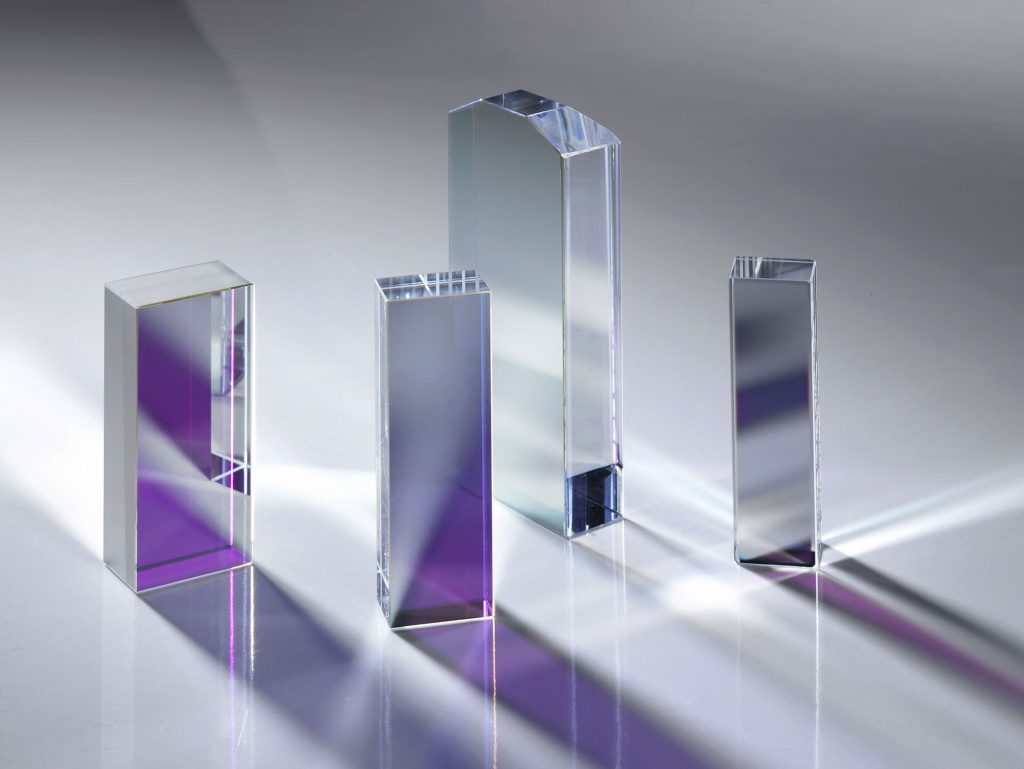
PCR Fluorescence Filter Set
PCR Fluorescence Filter Set Series

FAQs
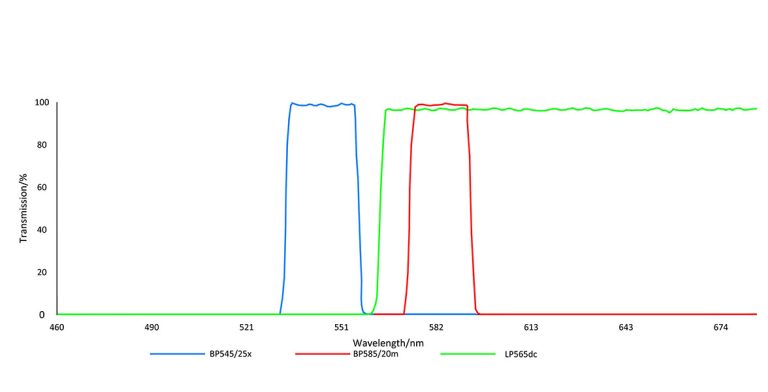
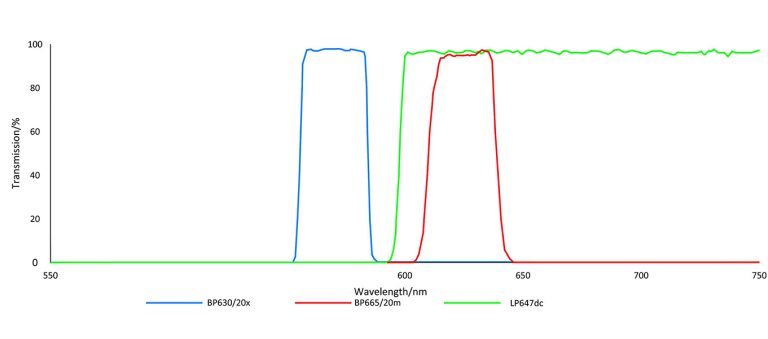
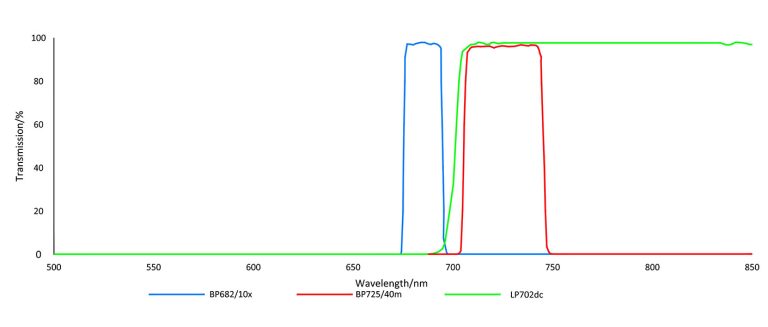
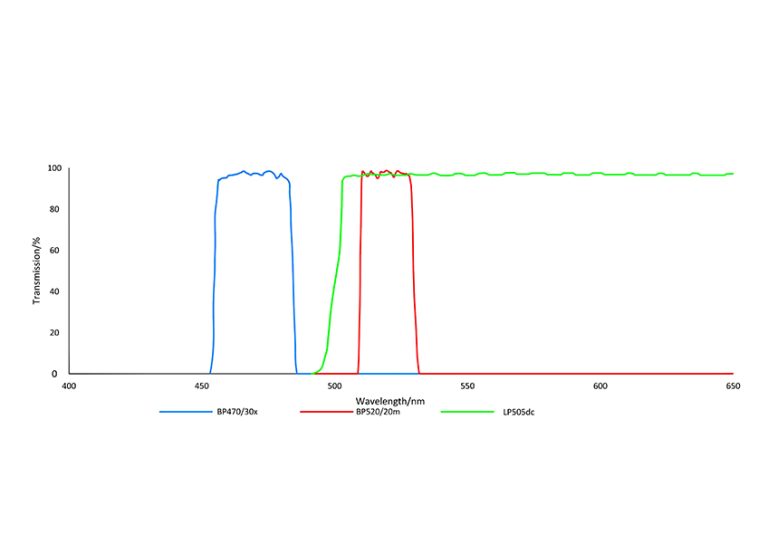
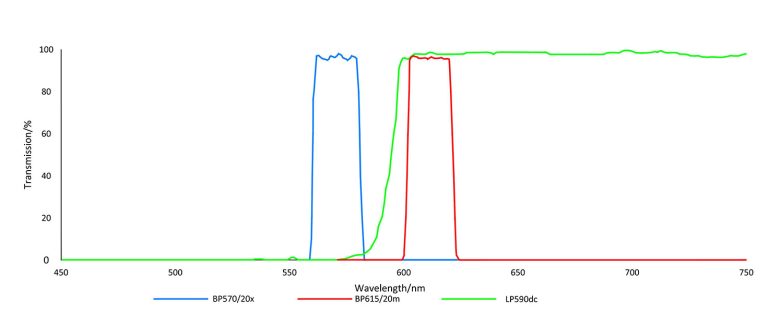
A PCR Fluorescence Filter Set is a core optical component in real-time quantitative PCR (qPCR) instruments, used to detect fluorescence signals for monitoring the DNA amplification process. It includes an excitation filter, emission filter, and often a dichroic mirror, designed to match the spectral properties of specific fluorescent dyes (e.g., FAM, HEX, ROX, CY5).
A standard filter set includes the following three filters:
-
Excitation filter: Placed between the light source and the sample, it only allows the narrow-band wavelength required to excite the dye.
-
Emission filter: Placed between the sample and the detector, it only transmits the fluorescence emission wavelength of the dye and blocks other light.
-
Dichroic mirror: Positioned at the intersection of the excitation and emission light paths, it reflects the excitation light toward the sample and transmits the emission light to the detector.
PCR filter sets are typically designed for common dyes such as SYBR Green, FAM, HEX/VIC, ROX/Texas Red, and Cy5.
When selecting a suitable PCR fluorescence filter set, consider the following:
-
Excitation/emission wavelengths must strictly match the dye used.
-
Whether single-channel (single dye) or multi-channel (e.g., 4-color, 5-color) detection is needed.
-
The bandwidth of excitation and emission filters should minimize cross-talk.
A PCR machine can support multiple channels by switching different filter sets using a rotating filter wheel, or by using a fixed multi-channel configuration: integrating several independent filter sets to enable simultaneous or time-separated detection. In this case, the dichroic mirror must support multi-band transmission/reflection.