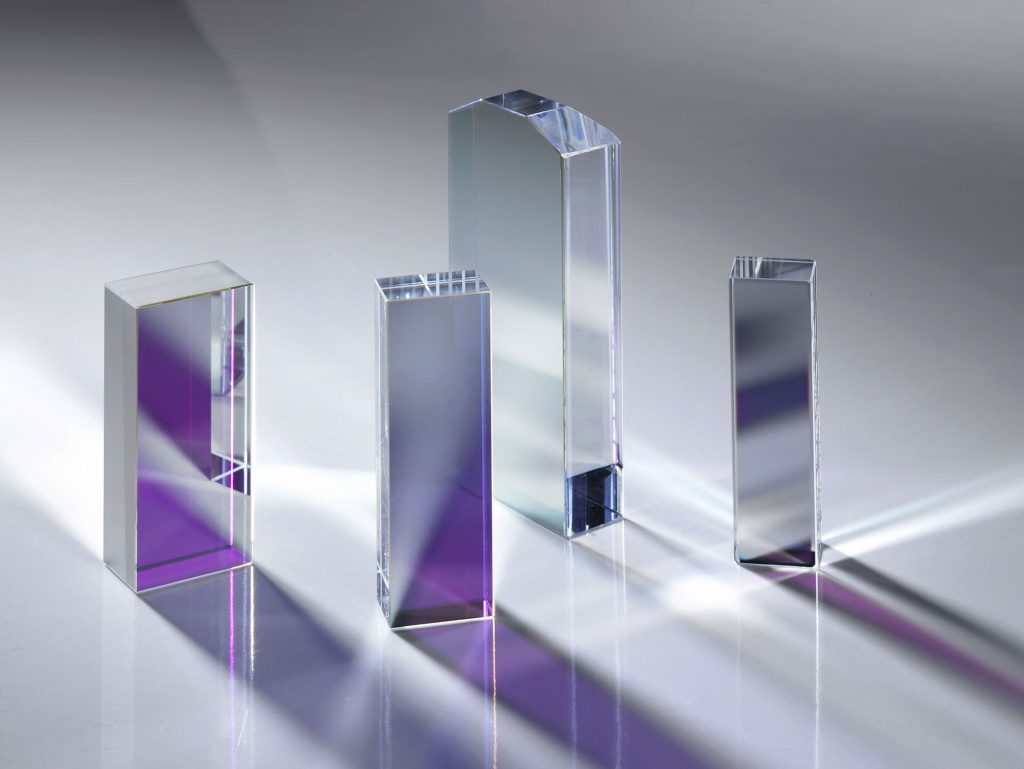
Multi Band Fluorescence Filter Set
Multi Band Fluorescence Filter Set Series

FAQs
A multiband fluorescence filter is a specialized optical bandpass filter that integrates multiple independent passbands on a single substrate. It allows high transmission of several specific wavelength ranges while strongly blocking all other wavelengths. A single multiband filter can replace multiple traditional single-band filters.
A single-band fluorescence filter has only one passband with no channel crosstalk. However, in multicolor synchronous imaging, it requires mechanical switching for different channels.
A multiband filter integrates 2–6 passbands into one filter, enabling simultaneous multicolor imaging. It offers larger total transmission area and stronger signal. Although it eliminates the need for filter wheels and drivers, the cost per piece is relatively high.
When designing a multiband fluorescence filter, two conditions must be met:
-
The emission spectra of the fluorophores should not overlap.
-
There should be sufficient separation between the passbands.
For example, DAPI + FITC + TRITC or CFP + YFP + mCherry are suitable combinations. If the emission spectra overlap significantly, a multiband filter is not appropriate.
Multiband fluorescence filters can be classified by function into multiband excitation filters and multiband emission filters.
By the number of channels, they can be categorized into triple-bandpass filters, quad-bandpass filter, and Penta-Bandpass fluorescence filters.
Yes, we have successfully customized dual-band, triple-band, and quad-band filters for clients.
Customers can request custom designs by specifying the number of channels, performance specifications, and isolation requirements.